Monday, January 11, 2016

Road Cyclists, Drivers, and The Law

Road cyclists who log lots of miles tend to have fairly frequent interactions with discourteous and even homicidal drivers. About once a week I have some pass very close or at very high speed. About once a month someone will pass on a blind corner of hill and then dive back right (towards me) when faced with incoming traffic.

Every so often I catch the driver at a light or stop sign. It never goes well.

Here are the usual brilliant retorts:
  • "All you guys think you own the road!"
  • "Get off the road! You don't belong on the road!"
  • "You guys roll through stop signs all the time!"
(I have to ask which "you guys" they are referring to, since there are no "you guys" --just me)

This results in cognitive dissonance ("This guy on a bike dares reply to ME, a Driver!!?!"). Unable to engage in discussion,  they commence expletive-filled tirades and drive off.

This before I have the opportunity to tell them I own two cars and a motorcycle and probably drive more and pay more taxes then they, and that they are, in fact, not owed Total Road Ownership.

It's very frustrating.

So I think I'm going to print up a bunch of cards and hand them out when I catch these idiots (I also carry a few other items to ensure the encounter doesn't go too far).

Fortunately, in 2012 the Pennsylvania Vehicle Code was amended to enhance safety for cyclists and guide motorists' behavior with respect to cyclists.  The key provisions are:

Four Foot Buffer Requirement: When passing, drivers must allow at least four (4) feet between the right side of the vehicle and the left side of the bicycle [75 Pa.C.S. § 3303 (a) (3)] . When safe to do so, it is legal to cross the center double yellow line if necessary to provide the required four feet when passing a bicycle [75 Pa.C.S. § 3307 (b.1)].


Right to Lane of Travel: Bicycles have the right to be in the lane of travel and there is no requirement that a bicycle be ridden at the right side of the right lane. It is only where a bike is moving at less than the prevailing speed of traffic that a cyclist must take reasonable steps to avoid impeding traffic [75 Pa.C.S. § 3364 (b) (2)]. While this can and should include moving as far to the right as is practicable, the law specifically states that a bicycle need not move to the right where:
  1. it is unsafe to do so due to road conditions [75 Pa.C.S. § 3301 (c) (2) and 3505 (c)],
  2. the road is only one lane in each direction [75 Pa.C.S. § 3301 (c) (2)],
  3. the right hand lane is for turns only and the rider is going straight [75 Pa.C.S. § 3301 (b) (2)],or
  4. the bicycle needs to move left to make a left turn [75 Pa.C.S. § 3301 (c) (1)].
Prohibition Against Forcing Off the Road: It is illegal to force a bicyclist off of the road. A driver may face criminal charges.

No Right/Left Hook: No turn by the driver of a motor vehicle shall interfere with a bicyclist proceeding straight on a roadway or shoulder [75 Pa.C.S. § 3331 (e)].

May Proceed Through Red when Traffic Signal does not detect Bicycle: Standard traffic signals sometimes do not detect bicycles. A cyclist may treat the signal as malfunctioning and proceed with caution [75 Pa.C.S. § 3112 (c) (2)]

PA VEHICLE CODE (TITLE 75)


Saturday, December 19, 2015

Backpack or Panniers?

Unfortunately many of the newsgroup posts and blogs I've read on this topic are absolute: "Real Commuters Have panniers!"

My impressions are completely superficial and overly simplistic but....

Pannier Users (PU) have cycled across continents wearing cargo shorts. PU have no need to exceed 15 MPH -- if fast was the point, PUs would drive their Prius to work.

Backpack Wearers (BW) wear heart rate monitors and have more than one road bike. They won't even consider installing fenders. They know what a KOM is and hear Phil Liggett's voice in their heads when they sprint.

I'll admit I'm a roadie. I don't race (anymore) but enjoy riding fast, know what The Rules are, and run 23mm tires at 120-140 PSI.

I wear a backpack on my 37 mile round trip commute over the rolling terrain of Lancaster County, Pennsylvania and have not once considered installing panniers.

Here are my thoughts:

  • I just can't over the aesthetics of panniers on a road bike. My CAAD 10 was not designed for panniers, baskets, or duffle bags.
  • Panniers are more likely to catch the wind than a backpack. Panniers are mounted outboard in the relative wind while a pack has very little surface exposed to the relative wind. Wind resistance slows me down. I don't want to be slow.
  • Since panniers are mounted lower than a backpack, the pannier (and whatever is inside) is more likely to pick up road crud and get wet in rain or puddles.
  • On a warm ride a backpack causes a sweaty back. But if it's warm, I probably have sweaty everything. Cycling specific packs will provide channels for air circulation and some moisture resistance to avoid sweat getting inside the bag.
  • The center of gravity (CG) is slightly higher with a backpack. The weight's on me, like a few extra cheesecakes. It's not like I lose all sense of balance in the winter when I gain a few pounds. The "higher CG" argument is bogus.
  • I also like the simplicity of a frameless pack -- no racks to install (and carry), no tie downs, no fiddling with straps to remove the pack at the destination, all in an easily packed and unpacked bag that I can carry into the office.
  • On the off chance I get separated from my bike, the pack stays with me. This is important when carrying valuables or other sensitive items (which is every commute).
  • Panniers would encourage me to over-pack. My small backpack limits what I can carry, so I am very selective.
  • Finally, the backpack provides one more source of impact protection in case of a fall.

Cycling Specific Commuter Backpack

I tried a few standard day packs but finally settled on a cycling-specific bag that's narrower than the typical day pack and meant to sit on the back of a cyclist in the drops.  Most day packs ride too high up the back and so the drop position will result in the bag pushing against your neck or helmet of both.

I've been wearing a Timbuk2 Especial Raider backpack since April of this year:
The 2016 model is slightly different
It holds my enormous lunch, two bottles of homemade iced tea, wallet, emergency gilet, Leyzene pump, can of pepper spray, work ID, keys, A## Savers rear fender, a tightly rolled pair of pants and fresh underclothes and socks. There is no room for shoes or a laptop, but I drive in frequently enough that I can stage clothes and shoes in my locker.

Backpack with Blackburn Rear Blinky
The bag has weighed as much as ten pounds, but usually runs 4-6 pounds when fully packed in the morning. I can feel the weight going uphill, but otherwise there's no change to position or approach.

My ride distance is 18.5 miles each way, so the pack has to be stable and comfortable for nearly forty miles a day.

Waffle Pattern Helps increase air flow between rider's back and backpack (sorta)

I've worn it on steamy July afternoons and cold December mornings and it has performed well. The chest strap helps keep the bag centered. There's reflective material on the bottom that's visible to cars behind you. I hang a RoadID and Blackburn blinky tail light on the light hanger on the bottom of the pack.

The pack came with a shirt board for packing a dress shirt. I used it once -- and never since. It's just not practical. No matter how carefully I followed the directions the shirt was wrinkled. I think this is amplified by the position of the shirt nearest the wearer's back -- everything else packed inside is pressing against the shirt while perspiration is making its way into the pack.

I do not commute everyday -- bad weather, customer visits, etc all conspire to make it impractical -- so I use my drive-in days to restock clothes and other necessities (I bring in a gallon water jug to have at my desk in the summer, for example). I suppose if I was riding every day I would need more storage than what the backpack affords. In that case panniers may be warranted.

Since that's not the case for me I'll stick with the backpack.

Whatever you choose, get out and ride!


Commuting in the Dark

I've been commuting to/from work since April. The distance is manageable 15-19 miles and 700' to 1000' vertical gain each way, with reasonably low traffic volume back roads for most of the way. There are a few stretches with heavy traffic but the shoulders are wide (except for one 500 yard stretch with a narrow shoulder).

I'm usually out the door at 6:15 AM in the morning, and around 5:20 PM for the return trip. In November it's dark for most of the ride. In December it's dark the entire ride.

My ride is a 2012 Cannondale CAAD10 with DuraAce drivetrain and Ultegra brakes. If it's raining I ride my 1992 Pinarello Stelvio with full fenders. I rarely ride in cold rain, though, so winter rain riding is rare.
My 2012 CAAD 10 right after an early morning ride
I've captured some of my experiences with various components and present them here for your edification. If you agree or disagree, let me know!

Wheels

The Rol wheels have been solid and bulletproof. They've turned out to be a solid commuter set. I wouldn't pick these to race, but they're fine for the demands of decent-pace commuting.


I prefer my Boyd Rouleur wheelset for fast riding. They're in the garage with Vittoria Open Corsa 23mm tires on right now, but it's unlikely I swap the sets out until spring.


Tires

I was very happy riding Vittoria Rubino Pros until a series of flats from small bits of wire ruined my day. I assume the wire was from shredded tire -- the sort of debris that collects along the shoulder of roadways. The Rubinos had been very good tires, but after a few flats it's easy to lose confidence. Loss of confidence often results in excuses for not riding.


I read lots of reviews and finally decided to put a 25mm rear and 23mm front Continental Grand Prix Four Season on my road bike. My experience with this tire on our tandem has been very good but limited.

Since the majority of the commute is in the dark, I usually can't spot debris until it's too late. I wanted Gatorskin puncture resistance, but not the Gatorskin ride quality (which I found terrible). The Grand Prix Four Seasons have been just as durable, while maintaining the ride quality of the flagship GP4000.


Since I've installed these tires, my commute has been trouble-free, despite 2+ hours of riding in the dark over a variety of unseen hazards. No matter - these tires just roll on through. I have nearly 600 miles on the pair and there is no visible wear yet. I run them 90-100 PSI each. I'm not chasing KOMs this time of year but I haven't noticed any increased rolling resistance or decreased average speed due to tires (the winter slowing is just me being cold and slow).

I bought mine from www.biketiresdirect.com  great prices and fast delivery.

Lights

I have two front and two rear lights, and some rides it's not enough.

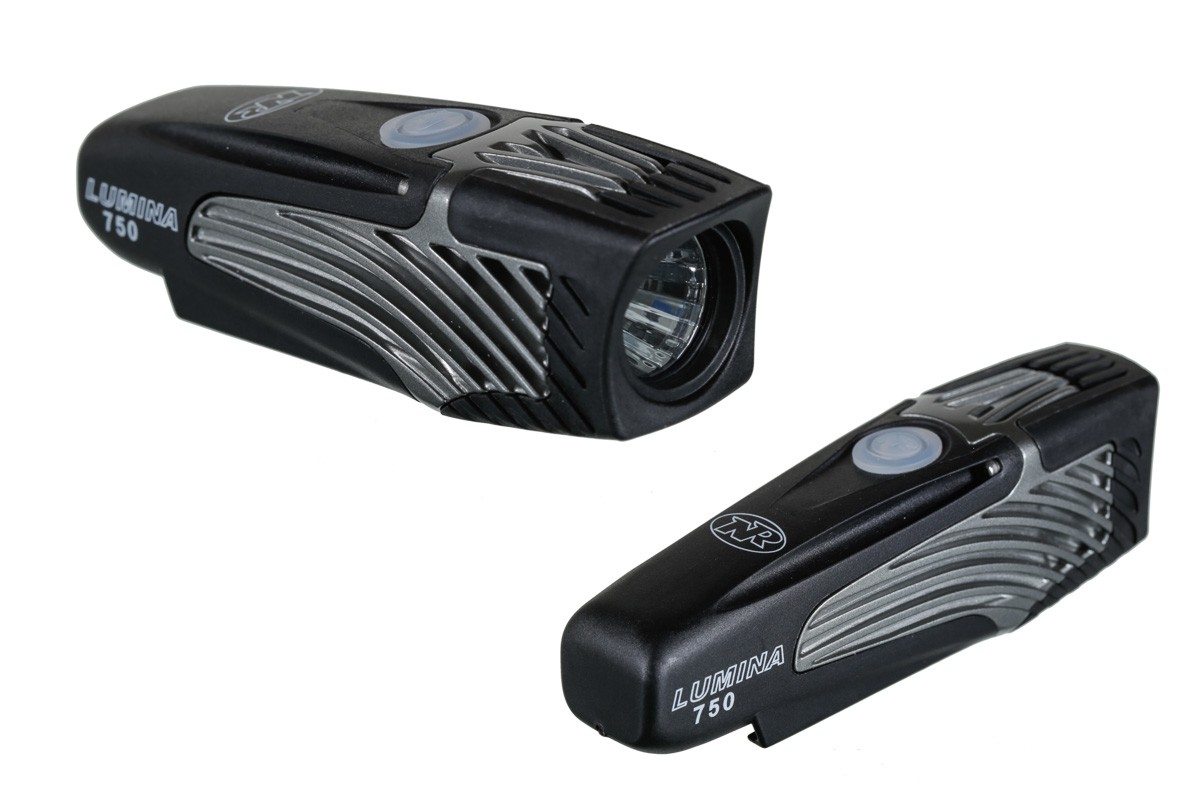
Up front, mounted on the handlebars, are a NiteRider Lumina 550 and NiteRider Lumina 750. The 550 is mounted on the left side of the stem to light up 10-15' feet ahead (to spot potholes, nails, glass, limbs). The 750 is on the right side and set up to illumine 35-50' ahead.


The twin lights make me look like a motorcycle or a car with a headlight out to oncoming traffic. I try to keep them on medium brightness when riding with traffic, high on empty backroads. The lights are bright enough on high that approaching cars will often flash their high beams.

Twin NiteRider Lumina Headlights (bike is on Park work stand)

The road is visible up to about 25 MPH. At speeds above 25 I'm overrunning the lights a bit.

I'm not a fan of NiteRider's new mounting system. It's an elastic band thing that is not quite tight enough. The old mounts rattled but that was easily fixed with electrical tape.

But the lights are bright, last at least 2 hours on medium, and charge from a USB port. I plug one in as soon I as I arrive at work. I really like these lights and enjoy the wide lit path and redundancy of two lights.

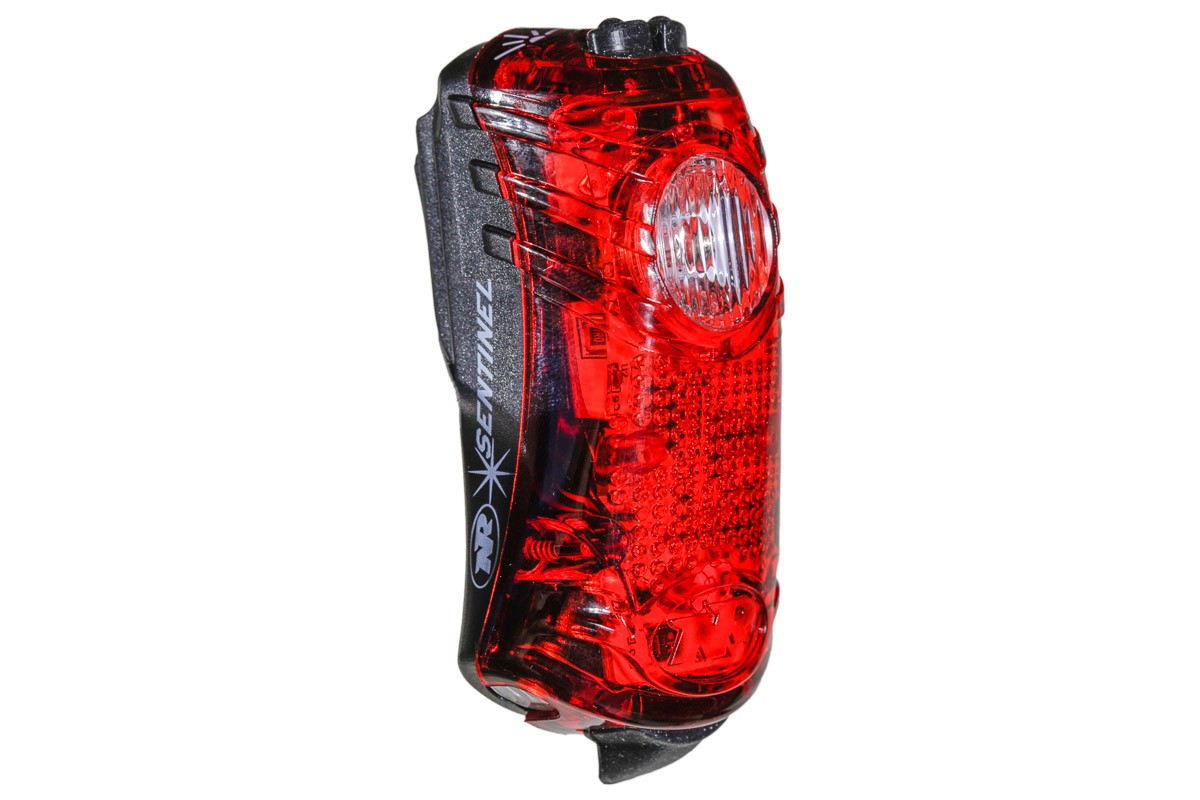
NiteRdier Sentinel tail light in action
The rear lights are a combination NiteRider Sentinel 40 mounted to the seat post and Blackburn blinky hung on my backpack loop. The Blackburn is bright enough for a secondary light and a good backup in case the primary unit fails. It uses AA batteries but they will last about a month of rides.


The Sentinel 40 is NiteRider's top of the line unit, with a two watt LED with 40 lumen output. There are five modes, from annoyingly blinky but very noticeable to more subtle blinkers and steady light. The light is USB rechargeable. The new feature is the two bright laser lines that are projected on the ground, about 3 feet offset from the centerline of the bicycle. I have no idea if this makes any difference to driver's perception, but it makes me feel better, especially when the light reflects off my ankles as I pedal. The light is visible from a LONG way off, so I almost feel more visible in the dark.

Reflectors

I wear a pair of ankle strap reflectors (I think I bought them from RoadID). They add some movement and width to my profile and also help keep booties on and seal drafty ankles. I'm going to add a pair of arm reflective straps for greater side visibility.


Booties

The never-ending quest for the perfect winter bootie continues. I've yet to find the ultimate combination: warm with being clammy, tight fitting but easy to get over road shoes, durable and reasonably priced.

Sadly the best winter booties are no longer made: the Performance neoprene bootie with fuzzy flocked interior (no idea what this model was called). I've worn these on REALLY cold days (single digits), and they have kept me from frostbite (I can't say I was "warm"). I save these for really cold days because the zipper might finally give out and I'll be without my go-to booties. These are 5 F to 25 F booties.

The next best are the Pearl Izumi booties, 2012 version of their winter shoe cover. It's a decent bootie, but the front end is just too thin. I wear these over toe covers in temperatures from 25-35 F.

I wear the Louis Garneau Neo Protect for slightly warmer rides. They are basic 3mm neoprene with a velcro strip closure on the rear. These are cool weather booties (35-45 F) as they are just too thin for really cold riding.

One recommendation is to use toe covers under the bootie (my favorites are the Pearl Izumi Elite thermal Toe Cover). My toes are the first to feel the frost. While thick wool socks may seem warmer, if you're riding Sidis or other close-fit shoe, you will cramp your feet and reduce circulation. Better to apply more thermal barrier to the outside of the shoe. Wearing toe covers under booties provides another 10 degrees of capability (turning a 40 F bootie into a 30 F).

I've tried the old-pro tip of covering my toes with aluminum foil. It actually helps a bit, but my feet sweat so I have to make sure there's enough ventilation to prevent soggy socks.

The Louis Garneau Wind Dry covers are barely worth wearing. These are thin material, and provide very little thermal protection. Ever so often I'll wear these in the morning when it's 45 or so, but they usually get tossed back in the pile after a ride.

Gloves

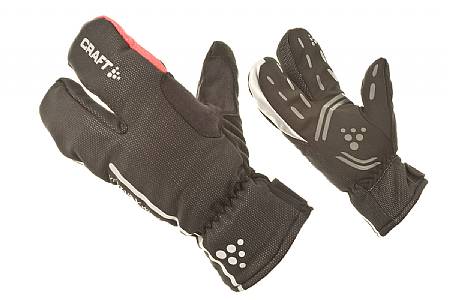
One pair I don't use are the Craft Siberians. They seemed promising but two annoying traits have limited their use:

  • the center split between the index/middle and ring/little fingers is too long, meaning I constantly have to slide the glove back up lest the seam dig into my hand,
  • there's insufficient play to actually manipulate the Shimano shifters.

You might think these problems mean the gloves are simply too tight, but when I'm not riding they are airy and almost floppy. A larger size would not help. While I'm sure Craft makes great products, the Craft Siberian Split Finger glove design doesn't work for me.


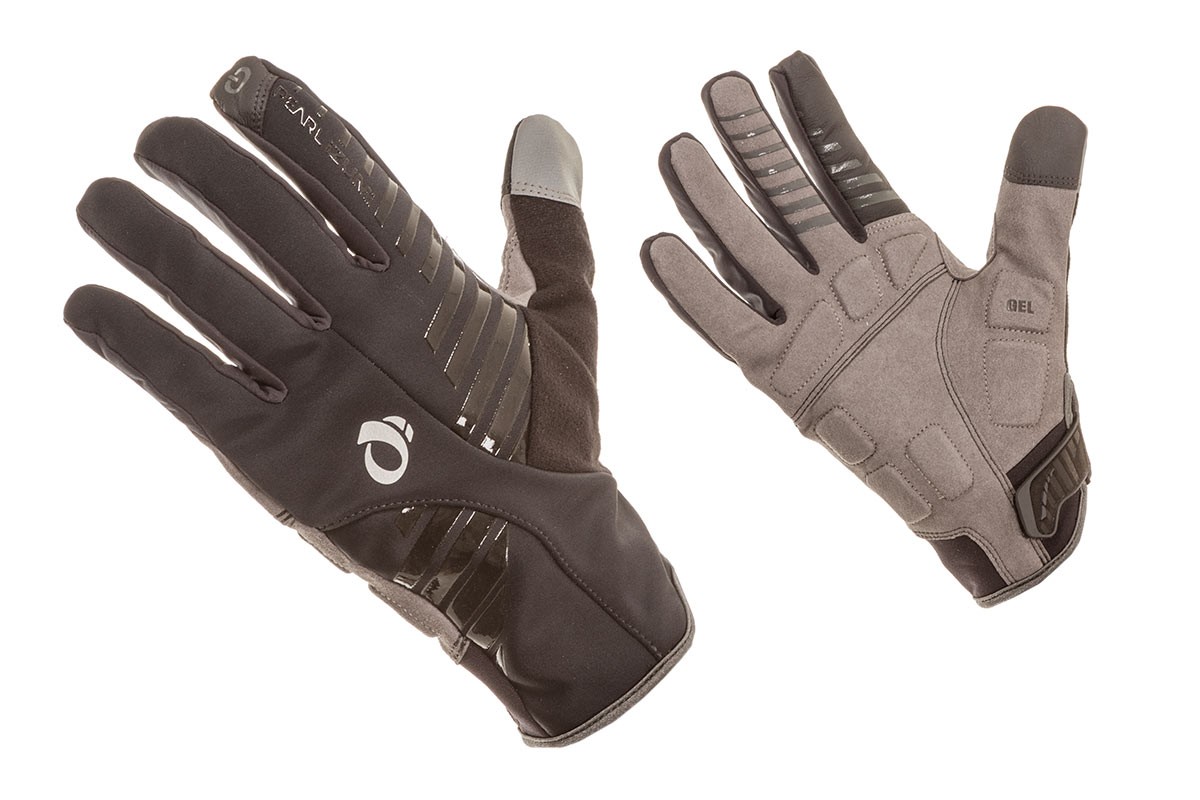
My usual winter gloves are a three year old pair of Pearl Izumis (I forget the model, and they aren't made anymore. These are the closest:
I used a pair of cheapo Target ski gloves on really cold days. They were big enough for a liner. The combination was the warmest for those really cold days.

These Pearl Izumi Lobsters are the warmest gloves I own -- Fantastic! Just practice a bit before heading out onto busy roads.

Socks

Wool. If you ride in winter, buy wool socks. On really cold days wear a silk liner sock underneath wool socks.

Clothing

This is a huge topic which I will write about in a dedicated post. Stay tuned!


\


Thursday, December 10, 2015

Review of Molteni Arcore Long Sleeve wool jersey from Vintage Velos

The Molteni long sleeve wool jersey from Vintage Velo was a gift from my lovely wife this year (I might have provided a link prior to the celebration):


I've been eyeing this garment for a while. Last year I considered asking for one for Christmas but they sold out.

This year it was ordered in time (I can't speak to shipping speed as I didn't know when it was ordered and when it was delivered --it was a 'surprise').

I can tell you it looked really, really good when I took it out of the gift bag -- the colors were authentic, yet vibrant. The lettering was sewn in place (again, authentically), the seams tight, and the feel of the fabric consistent and smooth. It's a size large, which concerned me, as I usually wear a medium in jerseys (even some of those are a bit big).

I tried it on and was pleasantly surprised -- a perfect fit, with just enough room for an undershirt. This is not a skin-tight aero jersey -- but Eddy didn't use this jersey for time trails -- why would I?

Eddy Merckx
I was anxious to wear it but decided against using it for commuting -- I wear a backpack and didn't want the straps pulling on the wool fabric.

Finally a Saturday morning came along that promised sunshine, if not abundant warmth (it's been a mild December so far, but temperature sin the mid-20s are still the norm before it warms up to 45-50 by mid-day).

I rolled out under clear skies, temperatures hovering around 35 F, winds light. I wore the jersey over a Craft long sleeve mid-weight undershirt and Santini bib tights.

The usual temperature profile for a morning ride in winter (for me, at least) is freeze the first three miles, gradually warm the next three, and then feel OK the rest of the ride, with fingers and toes chilled a bit if the temperatures are below 25 F.

If I leave feeling warm (or at least not cold), then soon I'll sweat and eventually be REALLY cold.

So I endure the first 5-10 minutes in order to finish the hour plus in the cold.

When I started the ride with the Molteni wool jersey, I felt decently warm.

That wasn't necessarily a good thing. I started to wonder if  I overdressed...

I decided to press on and see how it worked. Mile 3, 4, 5 -- by now I was up to operating temperature and rolling along. I could feel the slightest hint of moisture by mile 6, and a bit more at the top of the one decent hill on this loop (a 10% grind after a 2-3% approach).

But I never felt sweaty or clammy. Whatever perspiration I produced was quickly transmitted to the atmosphere.

The jersey never felt itchy (I have ridiculously sensitive skin which made sleeping on Army wool blankets a true test of fortitude). It never felt clammy, and yet I never felt cold.

The rear pockets are the normal three slots, a bit narrower than most modern polyester jerseys, but still usable. Sleeve length, overall size, and look were near ideal for me  (I have a typical cyclist body-  narrow up top, wider below. I'm 6'1", 175 and usually wear a size 15 1/2 33 dress shirt, 40 to 42 sport jacket).

I returned home after the quick 20 miler feeling good. I really like this jersey. It's authentic, fits well, and is just about perfect for thermal regulation in 25-45 degree weather. I haven't had it out in less than 25 F, so I can't say if it's suitable (though it probably is with sufficient base layers underneath).

It would be too warm for me in anything over 45 F, so for me this is a cold fall/spring, warm winter jersey.

I ride year round so I have a pretty good system for layering. I don't rely on any single garment, so there's no one jacket or jersey I'm depending on to keep me warm or dry.

The real benefit of this jersey is that you can proudly display the colors of one of cycling's brightest stars. Those who recognize this jersey will smile. The rest will think, "Hunh -- that's kinda different.."

Either reaction is fine with me.

Eddy says, "Wear it with pride!"
http://www.vintagevelos.com/en/team-jerseys-long-sleeve/45-molteni-long-sleeve-wool-jersey.html

Tuesday, October 27, 2015

Rol Wheels Volant Review

I've been very happy with my Boyd Rouleur alloy wheelset (reviewed here). I added another set when this year's edition went on sale for a few days in September.

Nevertheless, I like trying new equipment and thought I'd give the Rol Wheels a try. They had a sale going that made their Volant alloy wheels comparably priced to the Boyd Rouleurs (at regular MSRP the Rol wheels are more expensive).

Ordering was easy. Not long after I placed my order I was notified a shipping label had been created, soon thereafter I learned they shipped -- cool!

A few days later the box appeared on my front porch. Both wheels were nicely packed (tight, but still protected). I pulled them out, checked the overall build quality and figured they would be good commuters. I did not weight them but they felt heavier than the Boyds (the Rol wheel works site claims 1660 grams for the Volant set while the Boyd Rouleurs claimed weight is 1527 grams).

The rear hub had the same tinny sound I'm getting used to these days of super-lightweight everything (my 1997 Campy Super Record -equipped steel Pinarello is still the standard by which I judge every component), but it seemed slick enough and engaged instantly at any wheel position.

When I had some free time I mounted a set of Vittoria Rubino Pro 3 tires on the set in order to make a fair comparison (I use the same tires on the Boyds for training and commuting). I use 25mm on the rear, 23mm out front. The Rol wheels were standard size so the tires went on without too much trouble.

Setup for winter commuting with Rol wheels and Continental Grand Prix 4 Season tires
It was too late to test ride so I planned to just ride them to work the next morning on my somewhat hilly commute (18.5 miles one way). I rolled out in the AM and settled in for the ride. I hear a few spoke pops but that's normal for any wheel on the first trip. But then the sound continued -- mile 5, mile 10....

And then I stood up to climb the last little bit of Hickory road, a nice little back road that gradually rises from 3% grade at the bottom to 10% at the top (with a 13% kicker at the turn). All the way up I heard and felt wheel rub on my back brake. When I got to the top I hopped off an spun the wheel -- yep, as suspected, a nice wobble. Ugh. Brake loosened I continued on, grimacing each time I heard a spoke pop. This was NOT fun.


I made it to work but wasn't looking forward to the ride home. Fortunately the spoke pops reduced and the wide open back brake allowed the wheel to pass by without rubbing. But I could tell I was on "squishy" wheels that were robbing a few of the small number of watts I usually produce.

I immediately emailed Sean Lambert, owner of Rol Wheels:

Sean,
I'm sorry to report that I took my first ride with these wheels this morning (18 mile one-way commute over rolling Lancaster County paved, smooth, lightly-traveled farm roads) and was wildly disappointed.

There was spoke pop from mile 1 to mile 16, the back wheel rubbed the brake when standing up hills, and the front wheel is not true.
When I mounted the wheels I thought the front looked a bit off but chalked it up to illusion due to the large white logo. I checked tension and noticed a wide variety in notes among the spokes (checked the same point midway up the spoke, comparing same side).
But after riding today I moved the brake pads closer to check and sure enough the wheel was not true.
I really wanted to like these wheels -- the reviews are nearly all positive, and the Volant seemed perfectly suited my riding needs.
For comparison, I rotated off a set of Boyd Rouleur alloy wheels that list for $100 less. Those wheels came true and remain so after more than 2000 miles. Prior to those I used Neuvations and Shimanos RS-series (lower- end training wheels, but all in the 1600-1700 g weight/ $400-500 price range).
A bit later that morning I received this response:
Dan, I'm terribly disappointed to hear this. I will call you to discuss this morning. I have a Doctor's appt with my son this morning and then will be in the office. 
Talk with you soon. 
We did talk on the phone later that day and Sean expressed his concern and said he would ship out a replacement set immediately. A couple of days later they arrived. I mounted the same tubes and tires and tried the new wheels. I plucked the spokes, spun them on the work stand -- so far, so good.

The next morning I took them out -- Excellent! This was what I excepted: a decent wheelset that ran true, had been pre-stressed, and exhibited no spoke pop or wobble.

I've been riding these since August on my commute (a little less than 19 miles, 700-1000' of climbing each way for a total of 15000 miles) and they have been solid commuter wheels: Bombproof, solid, dependable.

They are a bit heavy but they aren't sold as race wheels -- the description on Sean's website calls them a "daily driver." That's where these wheels shine.

After the initial issue customer service saved the day and I can heartily recommend Rol Wheels.


Monday, October 5, 2015

NiteRider Sentinel Tail Light Review

The day's are shorter and I'm commuting to work most days so it was time to look at my safety items. I've been very happy with the excellent NiteRider Solas tail light (later iterations solved the loose mount issue that plagued the earlier versions). It was a solid light with decent brightness and battery longevity (I usually could commute for a week on one charge).

When the NiteRider Sentinel popped up as a sales item on Biketiresdirect.com, I clicked "Add to Cart."


The unit came mostly charged, so I tested it in the garage -- Wow! this thing is BRIGHT! At full blinky mode I think it might be too much for early morning rural roads (no need to blind already distracted, tired, inattentive drivers).

The second blink mode is more a pulse, from very bright to moderately bright and back. It's not as distracting but is still visible a long way.

What really sets the Sentinel apart is the laser lane designator, which is a small class 2 laser that projects a 6' line parallel to the centerline of the bicycle (when mounted upright to the seat tube). The line is about 3' from centerline. When pedaling the light appears on the back of my reflective shoe covers.

I rolled out at 6:15 this morning in the dark. I turned the NiteRider Lumina 500 Headlight (still a very good unit) and Sentinel tail light with blinking laser lights and pulse blinker mode.

My route follows quiet back streets until Main Street in Mount Joy turns into state highway 230 east of town. 230 is a secondary highway with pedestrian traffic and a nice wide shoulder and is frequently used by cyclists and a few Amish buggies.

The posted speed limit is 45 but people still fly on this road (making the actual speed more in the high 50 range). This morning I had no close calls, and several cars slowed and passed with a bit more caution.

Of course there's no way to credit this device with the improvement in driver behavior. But I'm convinced that noticeable lights help attract attention, and in this case enough attention that driver's have to process and adjust.

A phenomenon many pilots encounter when flying at night over large metropolitan areas is losing (or not seeing)  the airport. While airports have unique lighting features, they are often overwhelmed by the hundreds of thousands of lights in the area. Early in my Private Pilot training we flew to Baltimore Washington Airport at night. I couldn't see it! My instructor suggested I look for an  absence of lights -- and then I saw it -- a dark rectangle ringed with blue lights. Only after that could I make out the approach lights and runway edge lights. We landed and a lesson was learned.

Years later I flew from Pittsburgh to Georgia. It was late and very dark (no moon). The GPS was indicating the runway 1.5 miles out and the sky was severe clear, I looked intently but simply could not find the runway (runway lights are white, yellow, and red -- very common light colors in a populated area).

Finally I noticed a different color (in this case, the blue lights of the parallel taxiways) that caught my attention. We landed without incident.

It's the same for drivers -- we "see" many lights (especially early in the morning before sunrise), but our minds are trained to react to certain hues of red, green, and yellow. We've trained ourselves to ignore other lights.

The NiteRider Sentinel draws attention by being different enough to be noticed in a sea of lights. The red laser lane designators help drivers notice that there is something there. They notice a difference, slow or move away as they process, and then pass.

And that's all I want -- see me and avoid me!

Once the sun peaked out the lasers were simply too faint to be noticed. I turned them off and let the blinky catch some attention. The light is bright enough to be visible in morning and late afternoons. It's visible in bright sunshine but obviously less effective.

The NiteRider Sentinel is a great tail light and I can wholly recommend it as gear in the commuting cyclists' safety tool box.

Tuesday, July 7, 2015

Waving

There's a charming little custom among motorcyclists that cyclists should adopt. It's called the Wave, and it's considered poor form to refrain.


NOTE: Sure, there are some Harley purists who refuse to return a wave to anyone riding a "rice rocket," but they come by rudeness honestly, as they tend to suffer from various intestinal ailments and are constantly disappointed by the performance and durability of their machines. So we'll ignore them.


I make it a point to wave to any oncoming cyclist I see out on the roads. Of course this rules makes no sense on a bike trail, in a race, starting out on a tandem, or during a time trial. So we're absolved from this bit of etiquette while in engaged in those pursuits.


Otherwise, it's good form to wave and recognize the other person out toiling along on the roadways, exposed to the same weather, hazards, hills, wind, and dogs as you. While he/she may be pushing a 45 pound iron-framed Wally-World special, it's not your place to judge. Perhaps you started out on one of those heavyweights and gradually embraced high-quality Italian (Taiwanese) Carbon Fiber.

It doesn't matter -- that's another person riding a bicycle and that is a Good Thing. No matter our supposed level in the imaginary hierarchy, there's hardly ever a reason not to wave. Yet too often I've encountered Joe Catthree wannabe seething with rage as he (almost always 'he") passes by on the opposite side, unable to break concentration to wave since he's this close! to breaking that Strava KOM on Superflat Road.


It's beyond silly.

NOTE: If this description offends you, please close this page and continue your search for Altitude Sleeping Systems.

When you pass someone, it's also good form to say "Hello!" in a bright, cheery way that conveys mutual enjoyment in cycling. It's poor form to motor past someone like Armstrong strung out on Poe and T. I also time my pass when there's plenty of room (so I'm not threading the needle between the other rider and cars). Pas son the left if you live in a country that drive son the right side of the road.

We are a minority. We cyclists are all battling the elements, distracted drivers, narrow, debris-strewn roads, hills, wind, fatigue, and age.

So let's give a cheery wave or "Hello!" and help make the battle slightly less demanding.